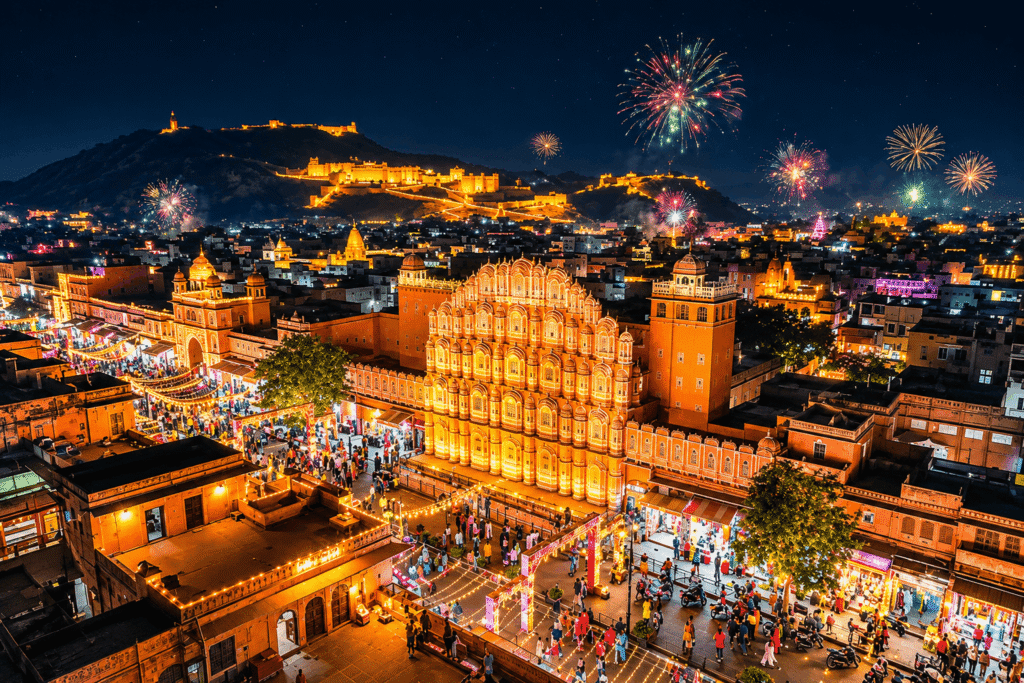
From the illuminated ghats of Varanasi and Ayodhya's spectacular Deepotsav to royal Rajasthan and Bengal's Kali Puja, discover seven destinations that reveal the many cultural expressions of India's Festival of Lights.
India's festivals offer a remarkable insight into its history, beliefs and regional identities. Among them, Diwali, or Deepavali, the Festival of Lights, is one of the most widely celebrated. Homes, temples, streets and markets are illuminated with earthen lamps and decorative lights, while families gather for prayers, festive meals and the exchange of sweets and gifts.
The festival is commonly associated with the triumph of light over darkness and good over evil. In many Hindu traditions, it commemorates Lord Rama's return to Ayodhya after fourteen years of exile. Diwali also has distinct meanings and observances across India's religious and cultural communities.
For international visitors, experiencing Diwali in India is about more than seeing illuminated buildings. It is an opportunity to understand local traditions, explore historic cities, discover regional food and witness living cultural practices. Each destination offers a different perspective on the festival.
Varanasi, also known as Banaras or Kashi, is one of India's oldest continuously inhabited cities and a major centre of Hindu spirituality. Situated on the banks of the sacred River Ganges in Uttar Pradesh, the city is known for its ancient temples, historic ghats, evening rituals, classical music, silk weaving and distinctive food culture.
Varanasi offers a particularly memorable festive experience because its most spectacular riverfront illumination takes place during Dev Deepawali, approximately fifteen days after the main Diwali festival. Celebrated on Kartik Purnima, the full moon day of the Hindu month of Kartik, Dev Deepawali is popularly described as the Diwali of the Gods.
According to Hindu belief, the gods descend to Earth on this auspicious night to bathe in the sacred Ganga. The festival is also associated with Lord Shiva's victory over the demon Tripurasura. As evening falls, thousands of earthen lamps illuminate the ghats, temples and riverfront. Their reflections shimmer across the Ganges, while devotional music, chants and the Ganga Aarti create an atmosphere unique to Kashi.
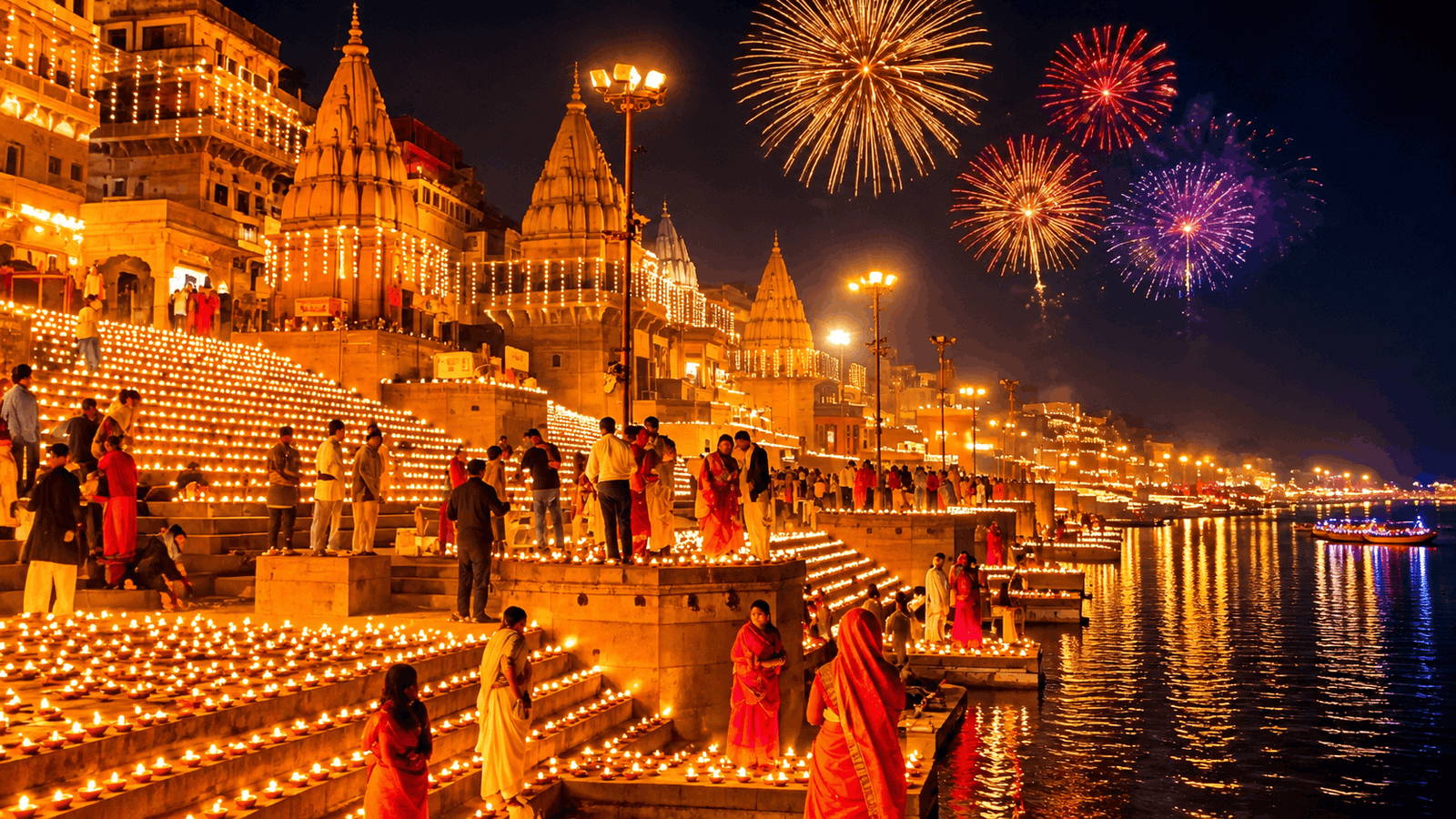
As thousands of lamps glow along the riverfront, a carefully planned boat experience can offer a distinctive view of Dev Deepawali. Visitors should book through authorised operators and follow local safety instructions, as river traffic and access arrangements can be tightly managed on festival evening.
Extend your visit beyond the festival with a heritage walk through the old city, a visit to the Kashi Vishwanath Temple corridor, a morning boat ride, or an exploration of Banarasi silk weaving. Food lovers can discover local specialities such as kachori-sabzi, tamatar chaat, malaiyyo in season and the city's famous sweets.
Read more about the city's signature celebration in our guide to Dev Deepawali in Varanasi.
Ayodhya, situated on the banks of the River Sarayu in Uttar Pradesh, holds a special place in India's cultural and religious imagination. Traditionally regarded as the birthplace of Lord Rama, the city is closely associated with the Ramayana and the story of Rama's return after fourteen years of exile.
Diwali in Ayodhya has a particularly strong connection with this story. The city celebrates the occasion through Deepotsav, a large-scale festival of lights in which riverfront ghats, temples and public spaces are illuminated with rows of earthen lamps. The celebration has become one of the most recognised festive events in Uttar Pradesh.
The sight of lamps arranged along the Sarayu riverfront creates a striking atmosphere. Cultural performances, devotional music, processions and themed displays may form part of the programme, depending on the year's official arrangements.
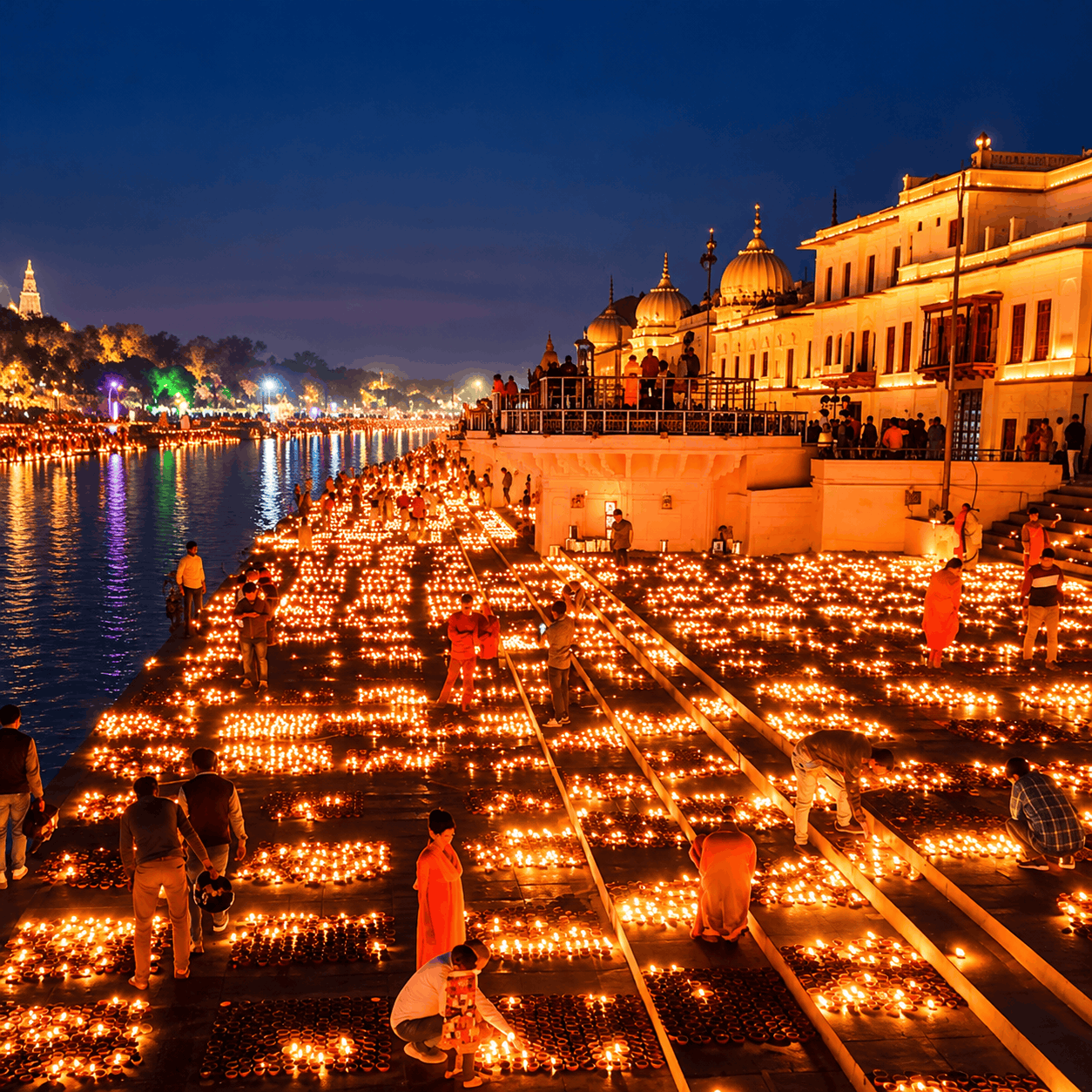
Deepotsav is rooted in the belief that the people of Ayodhya welcomed Lord Rama, Sita and Lakshmana with lamps on their return from exile. The modern public celebration brings this story into the city's streets and riverfront, creating a link between epic tradition, community participation and contemporary cultural programming.
Explore our dedicated guide to Ayodhya Deepotsav for more information about the city's festive traditions.
Jaipur, the capital of Rajasthan, is known for its grand forts, palaces, historic bazaars and distinctive pink-hued architecture. During Diwali, the city's markets and commercial streets take on a festive character, with decorative lighting, colourful displays and beautifully arranged shopfronts.
For visitors, Diwali in Jaipur offers a blend of royal heritage and contemporary celebration. The old city's planned streets and traditional markets provide a memorable setting for festive shopping, photography and discovering Rajasthan's craft traditions.
Diwali is a lively time to explore Jaipur's craft and food traditions. Visitors can look for block-printed textiles, blue pottery, traditional jewellery, miniature paintings and decorative items. Festive sweets such as ghewar, mawa kachori and ladoos are popular choices, while a traditional Rajasthani meal can introduce visitors to dal baati churma, gatte ki sabzi and ker sangri.
Amritsar in Punjab is home to the Golden Temple, the spiritual centre of Sikhism and one of India's most important religious landmarks. Diwali coincides with Bandi Chhor Divas, a significant Sikh observance commemorating the release of Guru Hargobind Sahib Ji from imprisonment, along with 52 other rulers.
The occasion is marked with prayers, illuminated buildings and a deeply devotional atmosphere at the Golden Temple complex. The reflection of the illuminated shrine in the sacred pool, known as the Amrit Sarovar, creates one of the city's most memorable sights.
Amritsar's celebrations are distinct because they bring together the wider festive atmosphere of Diwali and the specific historical and spiritual meaning of Bandi Chhor Divas. Visitors can learn about Sikh history while experiencing the community's devotion, hospitality and traditions.
Kolkata celebrates Diwali with a distinctive cultural character. The festival coincides with Kali Puja, dedicated to Goddess Kali, who is worshipped as a powerful form of the Divine Mother. Temples, neighbourhoods and decorated pandals become centres of devotion and community activity.
While many parts of India associate Diwali with Lakshmi Puja, Kali Puja is especially significant in West Bengal. The city is known for its elaborate decorative installations, artistic displays, traditional rituals and lively neighbourhood celebrations.
Kolkata's festive season is also an opportunity to explore Bengali cuisine. Visitors can sample sweets such as sandesh, rosogolla and mishti doi, along with local snacks and traditional Bengali meals. The city's cultural identity is reflected in its literature, theatre, music, architecture and food.
Delhi offers a varied Diwali experience, combining historic monuments, lively markets, residential neighbourhoods and contemporary celebrations. As India's capital, the city brings together traditions from across the country, making its festive season particularly diverse.
Markets and shopping districts are decorated with lights, homes display diyas and rangoli, and families gather for Lakshmi Puja and festive meals. Visitors can combine the celebrations with the city's remarkable architectural and historical heritage.
Delhi's markets offer opportunities to shop for decorative lamps, textiles, sweets, gifts and festive household items. Chandni Chowk is particularly well known for its traditional food shops, while the city's restaurants offer cuisines from across India. Visitors can explore Old Delhi's food heritage alongside its monuments and historic lanes.
Udaipur, often called the City of Lakes, is one of Rajasthan's most picturesque destinations. Its palaces, heritage havelis, narrow streets and waterfront ghats create a beautiful setting for the festive season. During Diwali, homes, shops and historic buildings are decorated with lights, while the city takes on a warm celebratory atmosphere.
Unlike the large public riverfront events of Varanasi and Ayodhya, Udaipur's appeal lies in its combination of lakeside scenery, royal architecture, traditional markets and intimate festive experiences.
Udaipur's festive season is an excellent time to explore Mewar's food traditions and heritage. Visitors can enjoy rooftop dining, lakeside views, traditional markets and cultural performances. Local cuisine includes dal baati churma, gatte ki sabzi and regional sweets.
Udaipur is particularly appealing to visitors interested in heritage hotels, traditional architecture and luxury cultural experiences. A longer Rajasthan itinerary can include Kumbhalgarh Fort, Ranakpur Jain Temple or Chittorgarh Fort, depending on available time.
One of the most fascinating aspects of Diwali celebrations in India is the way the festival reflects regional customs and religious beliefs. Although the central theme is often expressed as the victory of light over darkness, the stories, rituals and ways of celebrating differ across communities.
Diwali is also significant in other faith traditions. Jain communities associate the day with the nirvana of Lord Mahavira, while Sikhs observe Bandi Chhor Divas. These different observances add to the festival's wider cultural significance.
Travelling in India during Diwali can be rewarding, but popular destinations and religious centres may receive large numbers of visitors. A little preparation can make the journey more comfortable and meaningful.
Diwali follows the Hindu lunar calendar and usually falls in October or November. Dev Deepawali in Varanasi takes place on Kartik Purnima, approximately fifteen days after Diwali. Confirm the dates for the year of travel before booking.
Varanasi, Ayodhya, Jaipur and Amritsar can become especially busy during major celebrations. Reserve hotels and transport well in advance, particularly if you wish to stay close to a festival venue.
Diwali is an important religious occasion. Dress appropriately when visiting temples, follow local instructions, observe photography restrictions and be considerate during prayers and ceremonies.
Food is an essential part of India's festive culture. Try local sweets, traditional snacks and regional specialities while exploring markets and neighbourhoods. Ask about ingredients if you have dietary requirements.
Prefer traditional lighting, cultural performances and community-led celebrations. Avoid unsafe firecracker activity, follow local environmental rules and dispose of waste responsibly.
A knowledgeable local guide can explain the stories, history and regional customs behind the celebrations. Heritage walks, food experiences and visits to craft communities can add context beyond the main festival event.
Diwali offers an exceptional opportunity to discover India's cultural diversity through its traditions, architecture, religious heritage and regional celebrations. From the illuminated ghats of Varanasi and the Deepotsav of Ayodhya to Jaipur's heritage markets, Amritsar's Bandi Chhor Divas, Kolkata's Kali Puja, Delhi's historic neighbourhoods and Udaipur's lakeside palaces, each destination offers a different way to experience the Festival of Lights.
For international travellers and overseas travel partners, these destinations can be incorporated into thoughtfully designed cultural, spiritual and heritage itineraries. The right route depends on the festival dates, travel duration, visitor interests and local operating conditions.
UnDMC brings together regional destination knowledge, local operating strengths and coordinated travel expertise to help international travel professionals develop enriching India itineraries. From cultural journeys and heritage exploration to festival-based travel programmes, discover the possibilities of travelling deeper into India.
Explore our destination-specific information on Dev Deepawali in Varanasi and Ayodhya Deepotsav when planning a festive-season programme.
For festival background and current travel information, consult these official resources before finalising an itinerary:
Festival schedules, public access, transport and event arrangements may change. Always verify current details with the relevant tourism authority or event organiser before travelling.
Varanasi, Ayodhya, Jaipur, Amritsar, Kolkata, Delhi and Udaipur offer distinctive festive experiences, from riverfront illuminations and temple celebrations to royal markets and regional rituals.
Diwali usually falls in October or November. Its date changes each year because it follows the Hindu lunar calendar. Check the relevant year's calendar before planning your trip.
No. Dev Deepawali is celebrated on Kartik Purnima, approximately fifteen days after Diwali. It is particularly famous in Varanasi for the illumination of the Ganga ghats.
Ayodhya is traditionally associated with the birthplace of Lord Rama and his return after fourteen years of exile. Deepotsav commemorates this tradition through large-scale lighting and cultural celebrations.
Bandi Chhor Divas is a Sikh observance commemorating the release of Guru Hargobind Sahib Ji and 52 rulers from imprisonment. It coincides with Diwali and is marked with devotion at the Golden Temple.
Kolkata is particularly known for Kali Puja, dedicated to Goddess Kali. Temples, pandals and neighbourhoods host prayers and artistic celebrations, generally coinciding with Diwali.
The ideal duration depends on the destinations and festival experiences you wish to include. A multi-city itinerary requires additional time for travel between regions, and Varanasi's Dev Deepawali takes place after the main Diwali date.
Book accommodation and transport early, check festival dates, allow extra time for traffic, dress respectfully at religious sites and follow local safety and photography guidelines.
Explore meaningful cultural journeys across India with destination knowledge and on-ground coordination from UnDMC. Connect with our team to discuss India travel programmes for your clients.
Partner with UnDMC