Discover Dev Deepawali in Varanasi, when the ancient ghats of Kashi glow with thousands of diyas, the Ganga reflects a river of light and centuries-old traditions transform the city into one of India's most unforgettable cultural experiences.
Some experiences in India are difficult to understand from photographs alone. You can see the lights, hear the music and read about the rituals, but being there creates an entirely different impression.
Dev Deepawali in Varanasi is one of those experiences. As evening approaches, the ancient ghats along the Ganga begin to glow with thousands of earthen lamps, while prayers, devotional music and the famous Ganga Aarti create an atmosphere unlike an ordinary evening in the city.
For travellers interested in Indian culture, spirituality, heritage and authentic India travel experiences, Dev Deepawali offers an opportunity to see Varanasi at one of its most extraordinary moments.
To understand why this celebration is so important, it helps to first understand the significance of Diwali in India and then discover how Varanasi gives the Festival of Lights another remarkable dimension.
Diwali, or Deepavali, is India's Festival of Lights and one of the country's most widely celebrated festivals. Homes, temples, streets and markets are illuminated with diyas, decorations and lights, while families come together for prayers, sweets, gifts and festive meals.
The festival is widely associated with the triumph of light over darkness and good over evil. In many parts of India, Diwali is connected with the return of Lord Rama to Ayodhya after his exile. Other regions and communities have their own stories, rituals and customs.
That regional diversity is one of the most fascinating aspects of experiencing Diwali in India. The festival may share a common spirit, but its expression changes dramatically from one destination to another.
In Varanasi, the festive atmosphere continues beyond Diwali. Around fifteen days later, on the full moon of Kartik, the city celebrates Dev Deepawali — traditionally known as the Diwali of the Gods. The celebration transforms the ghats of the Ganga into an extraordinary landscape of lamps, devotion and light.
Dev Deepawali is celebrated on Kartik Purnima, the full moon of the Hindu month of Kartik. It is traditionally believed that the gods descend to Earth on this auspicious occasion to bathe in the sacred waters of the Ganga.
Another important tradition associates the festival with Lord Shiva's victory over Tripurasura. These stories give Dev Deepawali its spiritual significance and explain why the celebration is much more than a spectacular display of lamps.
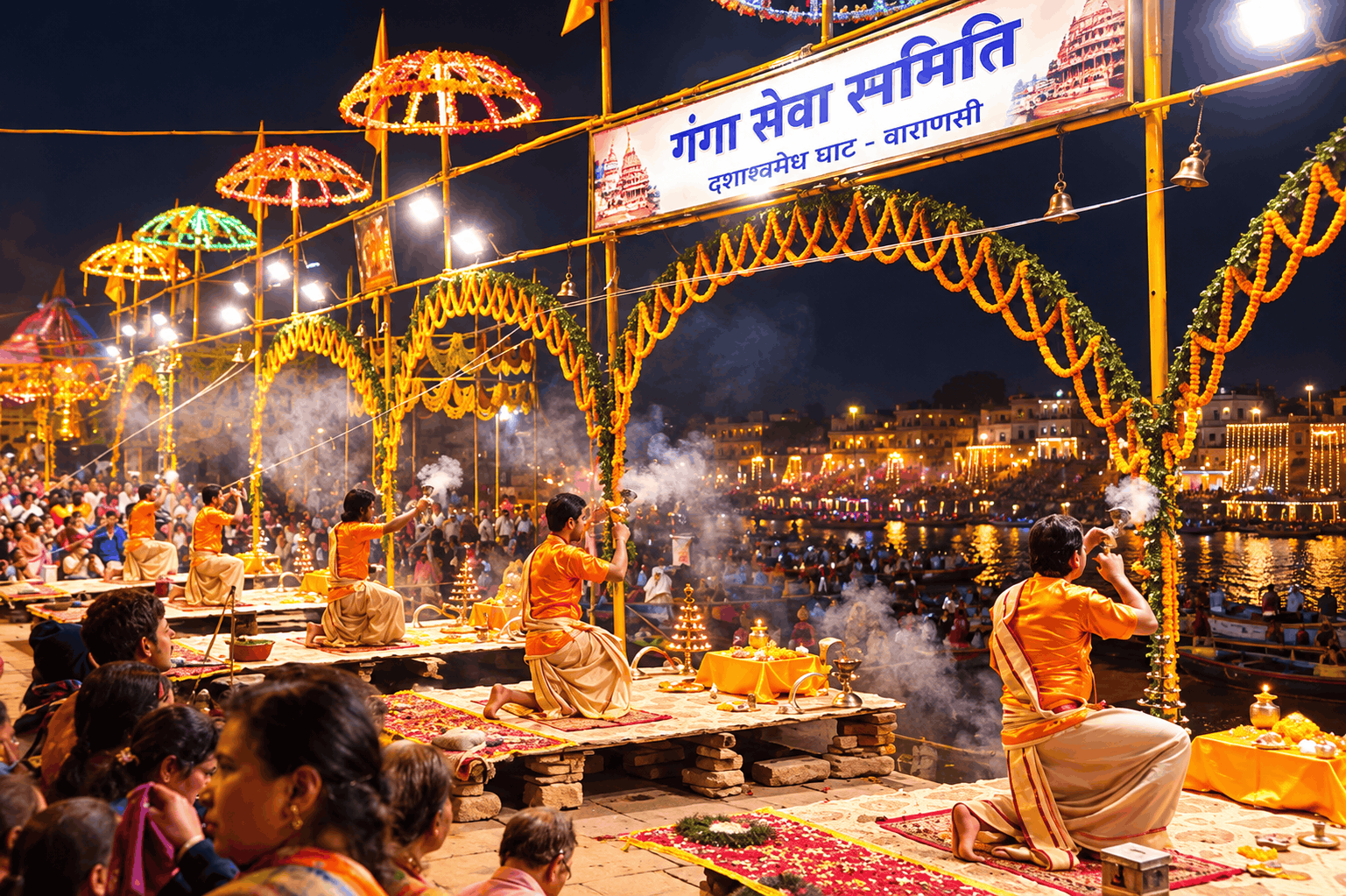
As darkness falls, diyas are lit along the riverfront and Varanasi's historic ghats begin to glow. The light reflects across the Ganga while bells, chants and devotional music fill the air.
This combination of faith, living heritage and visual beauty is what makes Dev Deepawali Varanasi such a compelling experience for travellers from around the world.
It is easy to look at Dev Deepawali as simply a spectacular festival of lights. But for Varanasi, the meaning goes much deeper.
The Ganga is central to the spiritual identity of Kashi. The ghats are not simply beautiful riverfront spaces; they are places where people come to pray, bathe, perform rituals, celebrate important occasions and reflect on life.
During Dev Deepawali, this living spiritual landscape becomes illuminated. The lamps are therefore not simply decoration. They form part of a wider expression of devotion, faith and community.
For an international traveller, this is what makes the experience particularly valuable. Rather than watching a staged cultural performance, you are witnessing a living Indian tradition taking place within the everyday spiritual landscape of one of India's oldest living cities.
The ghats of Varanasi form the heart of Dev Deepawali. The city has 88 ghats along the Ganga, with different ghats serving different religious, cultural and historical purposes.
During the festival, the riverfront becomes a continuous landscape of light. Ancient temples, historic buildings and stone steps create a dramatic backdrop for thousands of lamps.
For travellers, the experience changes depending on where you stand. A busy central ghat may offer a close-up view of rituals and celebrations, while another location may provide a wider perspective of the illuminated riverfront.

Among the best-known areas are Dashashwamedh Ghat, Assi Ghat and the historic central riverfront. Local access and crowd arrangements can vary, so visitors should always follow current instructions during the festival.
The official Varanasi tourism website provides information about the city's ghats and riverfront experiences.
Dashashwamedh Ghat is one of Varanasi's best-known riverfront landmarks and an important place to experience the city's celebrated Ganga Aarti.
As evening arrives, priests perform coordinated rituals with lamps, incense and devotional chants. The ceremony itself is atmospheric, but experiencing it against the illuminated riverfront during Dev Deepawali creates an even more powerful impression.
Expect crowds. Advance planning, patience and comfortable footwear can make a considerable difference, particularly around the most popular riverfront areas.
For additional information, explore Dashashwamedh Ghat through Incredible India.
For many visitors, a Dev Deepawali boat ride becomes the highlight of the entire experience.
From the river, the scale of the celebration becomes much easier to appreciate. Instead of seeing one ghat at a time, you can look back towards a long stretch of illuminated riverfront, with temples, buildings and countless lamps reflected in the water.
It also creates a little distance from the crowds on the steps. The boat moves slowly along the Ganga while the illuminated city unfolds on either side.
The river gives you a panoramic view of Varanasi. You see the lights as one continuous landscape rather than as individual displays. For photographers and travellers interested in atmosphere, it can be one of the most memorable perspectives of Dev Deepawali.
Book ahead: Demand can be high around the festival.
Check the boat: Private, shared and larger boats offer different levels of comfort and viewing.
Confirm the arrangements: Check the boarding point, duration, seating and inclusions.
Allow extra time: Crowds and traffic arrangements may make reaching the boarding point slower than usual.
Check current restrictions: River access and operating arrangements can change, so confirm details close to your visit.
The Ganga Aarti is one of the most recognisable experiences in Varanasi. Priests perform an evening ritual beside the river using lamps, incense and devotional chants.
During Dev Deepawali, the Aarti becomes part of a much larger atmosphere of light and celebration.
For a first-time visitor, it is worth arriving early rather than rushing in just before the ceremony. Watching the riverfront gradually fill with people, hearing the bells begin to ring and seeing the first lamps appear can be as memorable as the ceremony itself.
Dev Deepawali may be the reason to visit, but Varanasi offers enough cultural depth to make a longer stay worthwhile.
Witness the illuminated ghats and experience one of India's most remarkable festivals.
See the historic riverfront from the water and experience Varanasi from another perspective.
Explore temples, historic lanes, sacred sites and the living traditions of Kashi.
Discover Banarasi food, silk, markets, crafts and the everyday character of the city.
One of the biggest mistakes a traveller can make is treating Varanasi as a one-evening destination.
The city rewards slower exploration. Its temples, ghats, old lanes, markets, food traditions and craft heritage create a cultural experience that continues long after the festival lights disappear.
The Kashi Vishwanath Temple, dedicated to Lord Shiva, is one of the most important Hindu temples in Varanasi and a major pilgrimage destination.
If visiting during a busy festival period, check current entry, security and darshan arrangements before travelling.
Around 10 kilometres from Varanasi lies Sarnath, one of India's most important Buddhist heritage sites.
It is traditionally associated with the Buddha's first teaching after enlightenment. The archaeological remains, monuments and peaceful surroundings offer a striking contrast to the energy of the Varanasi riverfront.
For travellers interested in Indian history, Buddhism and cultural heritage, Sarnath is an excellent addition to a Varanasi itinerary.
Varanasi is also renowned for its silk weaving tradition. Exploring Banarasi textiles provides another way to understand the city's craftsmanship and commercial heritage.
Rather than simply buying a souvenir, take time to learn about the weaving process, fabrics, patterns and craftsmanship behind the textile.
Food is an important part of any India cultural holiday, and Varanasi has plenty to discover.
Try local vegetarian dishes, kachori, jalebi, seasonal sweets, chai and the famous Banarasi paan. A guided food walk can make the experience even more interesting by connecting individual dishes with the city's history and everyday life.
Dev Deepawali is visually spectacular, but the real value of the journey lies in experiencing the city around it.
A longer stay gives you the chance to see the Ganga at dawn, explore the ghats, visit temples, discover Sarnath, taste local food and understand the traditions behind the celebration.
This is particularly important for international travellers. Varanasi can initially feel intense, colourful and unfamiliar. Giving yourself time to slow down allows the city to become more understandable — and much more rewarding.
A quiet morning beside the Ganga, a conversation with a local guide, a walk through an old lane or a cup of chai after a temple visit can sometimes stay with you longer than the most photographed attraction.
A well-planned Varanasi travel itinerary should leave enough time for both the festival and the city's wider heritage.
Arrive in Varanasi, settle into your accommodation and take an introductory walk along the riverfront. Depending on local arrangements, experience the evening Ganga Aarti.
Begin with a morning boat ride on the Ganga. Explore selected temples and the historic lanes of Kashi before travelling to Sarnath and discovering its Buddhist heritage.
Keep the day flexible. Explore Varanasi earlier, rest before the evening and then experience the illuminated ghats from a suitable riverside viewpoint or from a boat.
Use your final morning to explore local markets, discover Banarasi textiles, enjoy local food and take one last walk beside the Ganga before continuing your India journey.
For international visitors, Dev Deepawali in Varanasi offers something that many conventional sightseeing holidays cannot provide: an opportunity to experience a living Indian tradition within the city where it belongs.
The festival can be particularly rewarding for travellers interested in India's religious heritage, cultural traditions, architecture, food, textiles and local experiences.
It is also an excellent addition to a wider India holiday. Varanasi can be combined with destinations such as Delhi, Agra, Jaipur, Lucknow or Ayodhya depending on the length and interests of the journey.
If you are travelling to India specifically for its festivals and living traditions, Varanasi does not need to be your only destination.
The spiritual atmosphere of Kashi can be combined with the heritage of Agra, the royal architecture of Rajasthan, the cultural character of Lucknow or the sacred traditions of Ayodhya.
For travellers interested in exploring more of the region, discover Uttar Pradesh through UnDMC and build a journey around its diverse heritage, culture and destinations.
Major Indian festivals can be extraordinary to experience, but they also require careful planning. Accommodation, transfers, guides, sightseeing, boat arrangements and crowd management all need to work together.
A local Destination Management Company in India can coordinate these elements while designing the itinerary around the traveller's interests, pace and available time.
This becomes particularly useful when Varanasi forms part of a longer India journey. Instead of arranging every component separately, travellers and travel partners can build a coordinated programme that combines cultural experiences with practical logistics.
The most meaningful India journeys connect the places you visit with the traditions, history, food and people that give them character. Dev Deepawali is an ideal example of why cultural context can make a travel experience far more memorable.
If you are a travel professional looking to create distinctive India programmes, explore Partner with UnDMC India for regional expertise and on-ground coordination.
Dev Deepawali attracts visitors from across India and overseas. Choose accommodation according to your preferred access, comfort and mobility requirements.
Crowds and traffic restrictions can make journeys around the riverfront slower than usual. Avoid tightly scheduled activities immediately before the main evening celebrations.
Exploring Varanasi often involves walking through narrow lanes and uneven ghat steps. Comfortable footwear is essential.
Remember that Dev Deepawali is a religious celebration, not simply a public spectacle. Follow local instructions, avoid obstructing ceremonies and ask before photographing people where appropriate.
Festival access, boat operations, security arrangements and local movement restrictions can change. Always check the latest official information before travelling.
Dev Deepawali is a major festival celebrated in Varanasi on Kartik Purnima. It is traditionally known as the Diwali of the Gods and is associated with the belief that the gods descend to Earth to bathe in the sacred Ganga. The ghats are illuminated with thousands of diyas and the city becomes a centre of devotional and cultural celebrations.
Diwali is India's widely celebrated Festival of Lights, observed across different regions with distinct customs. Dev Deepawali takes place in Varanasi around fifteen days after Diwali, on Kartik Purnima, and is particularly associated with the illuminated ghats of the Ganga, devotional rituals and the spiritual identity of Kashi.
According to Hindu belief, the gods descend to Earth on Kartik Purnima to bathe in the sacred waters of the Ganga. This belief gives the festival its traditional name, the Diwali of the Gods.
The Varanasi riverfront and its ghats form the heart of the celebration. Dashashwamedh Ghat, Assi Ghat and other accessible sections of the riverfront can offer different perspectives. Local access arrangements should always be checked during the festival.
A boat ride offers one of the most panoramic views of the illuminated ghats, but it is not essential. Travellers can also experience the festival from suitable riverside viewpoints, depending on access and crowd arrangements.
Allow time for the Kashi Vishwanath Temple, Ganga Aarti, historic ghats, old city lanes, Banarasi silk, local food and Sarnath. These experiences reveal the wider cultural and spiritual character of Varanasi.
Sarnath is approximately 10 kilometres from Varanasi and can be included as part of a wider cultural and heritage itinerary.
Yes. Varanasi can be combined with destinations such as Delhi, Agra, Jaipur, Ayodhya and Lucknow depending on the length and interests of the journey.
A local India DMC can coordinate accommodation, transport, guides, sightseeing and festival arrangements while helping create a well-paced itinerary that works around crowds and local conditions.
There are many reasons to visit India, but some of the most memorable are not found inside monuments or museums. They happen when a living tradition transforms an entire city.
Dev Deepawali in Varanasi is one such experience.
The illuminated ghats are spectacular, but the real magic lies in everything surrounding them: the sacred Ganga, the sound of temple bells, the rituals, the old lanes, the food, the silk, the boats and the extraordinary sense of continuity that defines Kashi.
For travellers who want to understand India rather than simply see it, Dev Deepawali offers a rare opportunity to experience the country's spiritual and cultural heritage in a deeply immersive way.
And once the lamps disappear and the riverfront returns to its quieter rhythm, Varanasi still remains — waiting to be explored beyond the festival.
From the glow of Dev Deepawali to the timeless Ganga, discover Varanasi through meaningful cultural experiences, heritage and locally informed India travel planning.
Plan Your India Journey